


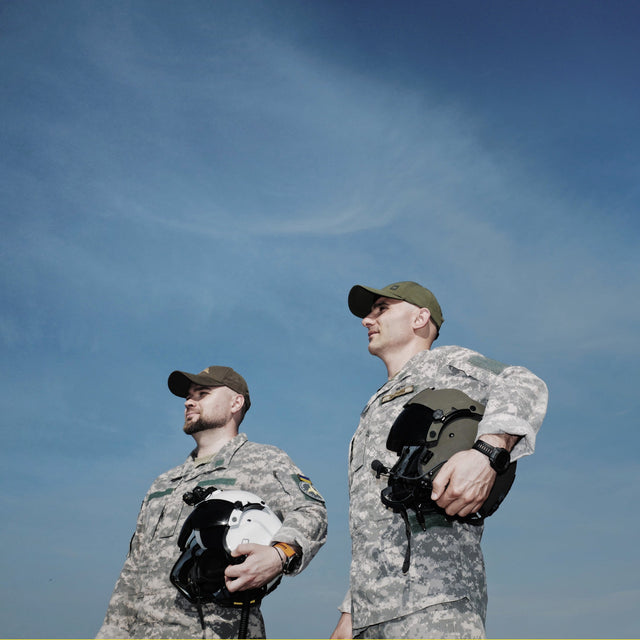
ARMY AVIATION: A BLITZ INTERVIEW WITH PILOTS IVAN PEPELIASHKO AND OLEKSII CHYZH
When we imagine superheroes, we often imagine them as people who can fly. Ahead of July 3, Army Aviation Day of the Ukrainian Ground Forces, we met with those who rise into the sky and hold the ground there. Ivan Pepeliashko and Oleksii Chyzh have been doing their superhero work for 14 years. We talked with them about what this work and path are like, as well as heroism, the aviation family, and memories - both warm and painful.
Happy Army Aviation Day. With great gratitude to those who pursue their calling in the airspace - and to those who heroically gave their lives for it.
Congratulate the aviation family with a donation to the “Mission: Beacons” fundraiser by the “Ohorta” Charitable Foundation to support their work - support real superheroes.

Ivan, Oleksii, happy holiday. Tell us about your work.
I.: We are the infantry’s tool. We do everything in its interests.
O.: Yes, army aviation is part of the Ground Forces. Our direct purpose is to support infantry troops by striking or destroying enemy personnel and enemy equipment, primarily armored equipment, on the front line or in the tactical depth. Army aviation can conduct aerial combat or special flights, including airborne deployments and medical evacuations. In other words, we are everywhere.
“We are the infantry’s tool”

I.: How do city residents experience war and hostilities? They experience the enemy’s missile and air attacks. Army aviation has found its role in destroying the enemy’s air targets - Shaheds.
O.: And it does this very successfully. I cannot give a percentage, but alongside interceptors and other forces involved in air defense.
I.: Aerial combat somewhat resembles World War II, when planes took to the skies to destroy one another. Our goal today is to get airborne as quickly as possible, find the target in the air, and destroy it so that its fragments do not harm civilians. When you shoot down a Shahed and it flies downward, the entire crew rejoices, but you still think: “There’s someone down there: even if it’s only foxes, little animals, or chipmunks.” It tears at your heart simply knowing that this is falling onto our territory. The best thing is when it is completely destroyed. Utterly destroyed in the air.

O.: The fragments are also very dangerous for the helicopter and its crew, so you must always maintain the established parameters you work within. I try to fight against this, but our pilots are brave, devoted, and do everything to destroy the target as quickly as possible. There was a case when a Shahed could have hit a group of people and had already begun diving, but the pilot moved closer than was permitted to save their lives. He was wounded.
I.: The closer you are to the target, the greater the likelihood of being hit. And there is less time to engage it. The pilot took that step, and that is heroism. How do you distinguish where there is heroism and where there is not? Heroism is when you realize that you are risking your life. You realize that the likelihood of being injured is very high. Heroism is self-sacrifice.

O.: Heroism is about saving other people’s lives. You place the value of your own life on one side of the scales, and the value of other people’s lives or the protection of equipment on the other. We have such people, wonderful people. Army helicopter aviation is a family of the best people. There are many cases, including heroic ones, that unfortunately we cannot talk about.
“You place the value of your own life on one side of the scales, and the value of other people’s lives or the protection of equipment on the other”

Why did you choose this particular role in the war?
I.: We did not choose the profession - it chose us. I have been in the skies since 2012, and I have not seen any other role for myself. I did what I had learned at university and then in the brigade. And then the time came to prove that you are capable of something. It seems to me that it is impossible to fully realize yourself in civilian life. It is war itself, combat itself, and the risk to your life that make you understand who you are. There are no other circumstances that can help you answer this question.
“It is combat itself and the risk to your life that make you understand who you are”

O.: I have been in the service since 2010 and in the skies since 2012. We have duties in the service that we must fulfill. And, on a global level, do everything possible not to lose this war. Army aviation is quite a good tool for that.
“Do everything possible not to lose this war”
I.: I am deeply convinced that every person wants to find themselves and feel respected. Personally, I follow this principle: if you like it, you will succeed, and it will be useful. I want to feel that I did not live the day in vain. This is my civilian perspective on your question.
There is also the military perspective. Because when you take the oath, an agreement is made between you and the state: you undertake to carry out missions in the sky, and the state begins spending money on you. Enormous amounts of money. An aircraft costs more than $10 million. One hour of flight uses 850 liters of fuel. Hundreds of hours are needed to train a first-class pilot. So in 2022, the state placed its hopes in us and our training. There was no possibility that I would suddenly become a sailor :) But even if I had a magic wand, I would not change anything. There is nothing better for me than the airspace. This is my place of strength.
“There is nothing better for me than the airspace. This is my place of strength.”

What achievements in your service are you most proud of?
I.: Our greatest shared achievement is returning to the skies. Four years ago, we could only dream about it and talked about it on the phone every day. So for us, this magnificent achievement - being allowed to return. I climbed into the pilot's cockpit, put my feet on the pedals, and started wondering whether I could do it. The flight took place, and I was happy that my injuries did not get in the way. These injuries prevent me from running, but not from flying. This is an achievement for me.
Which mission do you remember most?
O.: The defense of Kyiv is what I will remember for the rest of my life. But I hope it never happens again.
I.: Free hunting for the enemy along the routes leading to Kyiv (this was at the beginning of the defense of Kyiv).
O.: Yes, helicopters were independently searching for and destroying enemy columns in all directions at the time. At first, army aviation operated quite effectively, but this effectiveness came at the cost of survivability. It's no secret that many aircraft were shot down and people died, because they flew dangerously close. There was the widely known operation to transport troops and supplies to Mariupol (and evacuate the wounded on the way back). There was Snake Island - completely occupied by the Russians, with their air defenses set up, yet our helicopters flew there and all returned. Later, we sacrificed some of our effectiveness to preserve survivability. We learned to fire from greater distances in the nose-up flight mode. Army aviation continues to do this today.

In your opinion, how can we build a bridge between the rear and the front?
I.: You are either in the army or working for the army.
O.: Or just don't get in the way :)
I.: I like civilians who join our family and suggest crazy ideas. Although you have to endure the first 10 minutes of talking with military personnel, because we are skeptical :) That's why I admire the perseverance of some civilians. But if you get through those 10 minutes, we'll say: “Why not? Let's do it!”.
“I like civilians who join our family and suggest crazy ideas”
What do you dream of now?
O.: Of a peaceful future.
I.: I dream of Kherson. Of Kherson having a peaceful life.

What gives you the faith and determination to continue the fight now?
I.: The most valuable thing we have is our aviation family. Without my brothers-in-arms, I would have given up halfway. The other half is my family. So I have my family at home and my aviation family.
O.: These are the greatest engines of our lives.
“The most valuable thing we have is our aviation family”

Tell us your favorite story from work.
O.: This is not a very cheerful story, but it is important to me. At one point, I lost my desire to fly. Once, when I was still a young lieutenant, I began flying at night. I was trained by an instructor who never minced his words - that was when I heard a lot of new things about my eyesight and hearing (and I heard that shouting quite well :). So I decided it wasn't for me and was ready to write a report. Why waste fuel on me?
On my way home with my colleague Serhii, who had flown with the same instructor before me, I shared my thoughts with him, and he replied: "What are you, an idiot? If I wrote reports every time someone yelled at me during a flight, there wouldn't be enough paper in headquarters, but I keep flying." I'm still grateful to him for those words because they gave me confidence - I never had thoughts like that again. Unfortunately, Serhii was killed in the war in 2022.
I.: There are many funny stories in aviation, but they are always connected to people. And many of those people are no longer here.

What artifacts are always with you and help you keep going?
O.: These are geese that a volunteer named Nelia gave us. She helped us a lot when we were in the hospital.
I.: She got us back on our feet.
O.: She would simply come by to chat and smile - and already it became easier to get through the day.
I.: Someone she knew made these geese by hand.
O.: You put it in the cockpit - and immediately remember those positive moments, which makes it easier to carry out the mission.

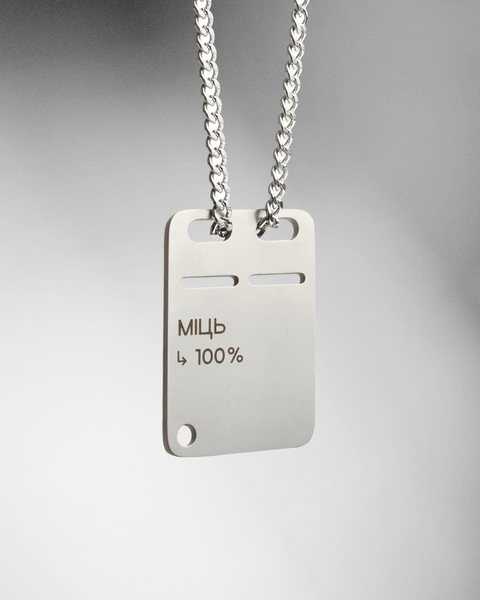
And what's on your tags?
O.: There are helicopters everywhere for me - here's another one :) You can never have too many helicopters.
I.: I'm a fan of the Mi-8 because I devoted a lot of time to it. It may have saved my life on March 8, 2022, when we were shot down (Ivan and Oleksii were taken prisoner then and spent 36 days in captivity - ed.) That's why I now have a Mi-8 strike pair.

If you could become a character from a game or movie, who would you choose?
I.: One of the reasons I chose helicopters was the Carlson cartoon I watched as a child :) He can fly whenever he wants without refueling, flight clearance, or filling out flight logs - he just decides to fly and off he goes! *they laugh* That's great. I would be Carlson. Toothless from "How to Train Your Dragon" is cool too. His tail got damaged a bit there, but everything turned out fine afterward.
O.: I would also be a superhero who could fly :)

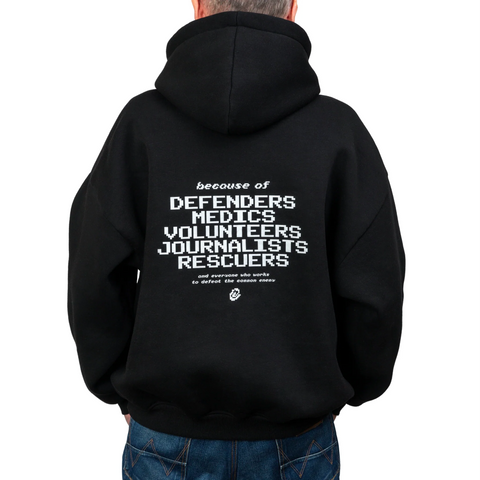
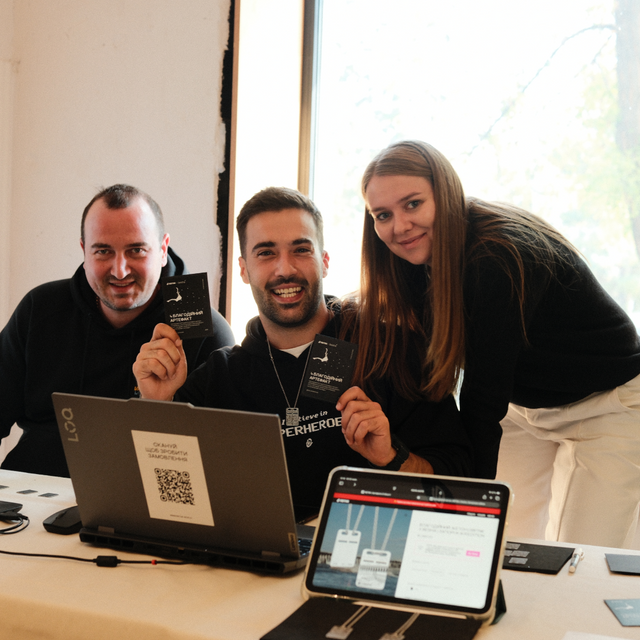
Wear symbols that unite us. Order an RBTNK tag, like Ivan and Oleksii, join our community, and help real superheroes - make a donation to the "Mission: Lighthouses" fundraiser by the "Ohorta" Charitable Foundation for lighting support systems for crews.

0 comments
No comments yet